
Space has long been described as a domain of research, exploration and commercial opportunity. The political message coming out of Europe this September was a different one: space is now a security domain, and Europe intends to treat it as such.
German Defence Minister Boris Pistorius used an international summit in Paris to underline a simple point — rules and declarations alone will not protect satellites, navigation signals or communication links. Only real capabilities will. Recent conflicts have shown how quickly space-based services can become a target, and how disruptive jamming, interference or the loss of a single satellite service can be for civil society, industry and armed forces alike.
Several priorities emerged from the debate. Europe wants to build joint command structures for the space domain, invest in next-generation reconnaissance from orbit, agree on common standards and interfaces so national systems can work together, and open procurement to cross-border partnerships. Independent European access to orbit is part of the same picture: the first successful orbital launch from continental Europe was highlighted as proof that European industry, start-ups and research institutions can deliver when given room to compete.
Germany has also adopted its first national strategy for safety and security in space and is now moving into implementation, including the announced "Space Safety and Security Academy", which is to be open to partners from the European Union and beyond, and for hosting a European space component command. The direction of travel is clear — faster innovation cycles, open architectures, and the ability to integrate new technology quickly instead of over decades. The Minister also noted that investment in space and defence has been financially earmarked at €35 billion for the next five years.
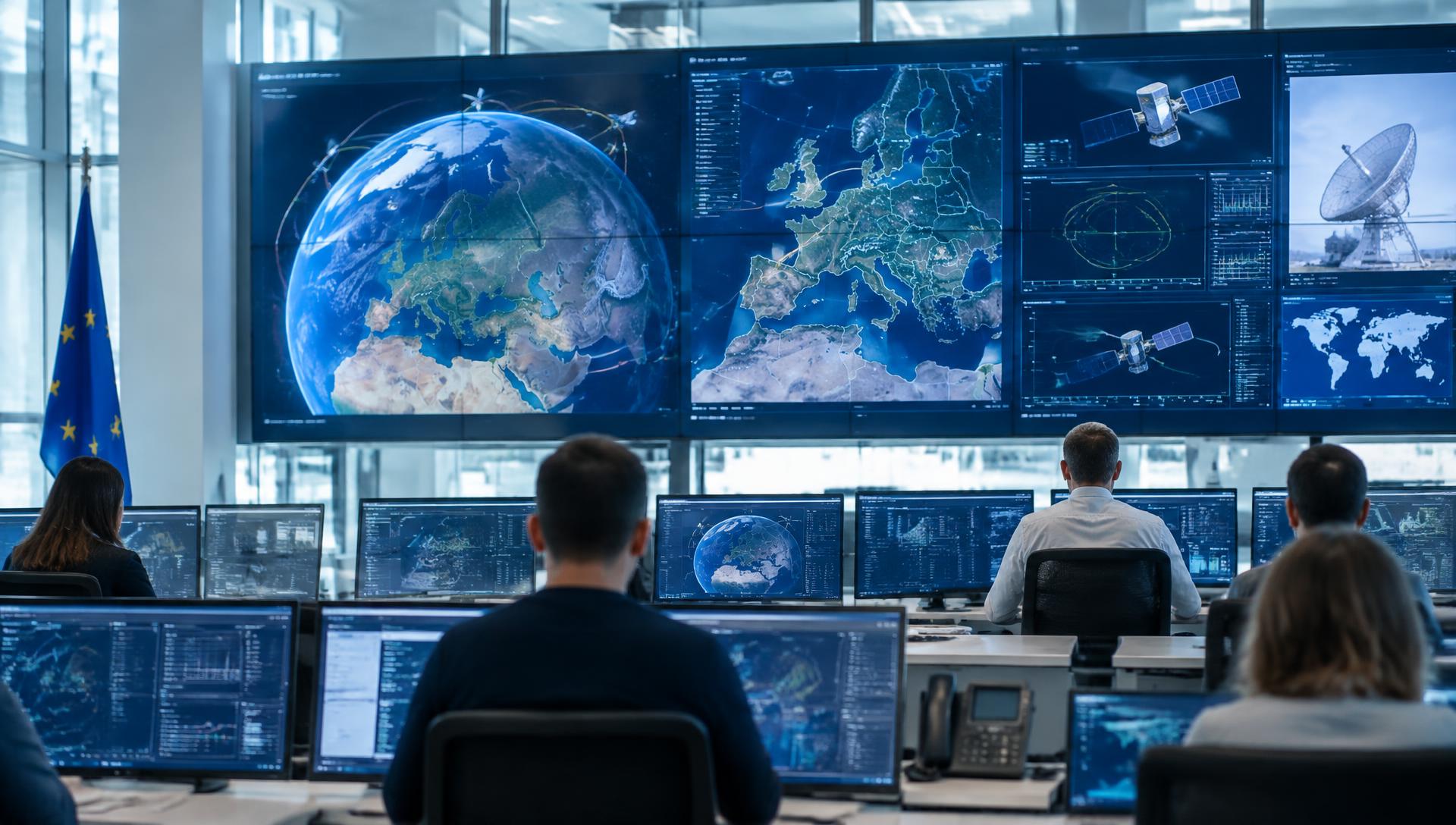
What does this mean in practice? Protecting space is not only about hardware in orbit. It is about knowing what is happening around a satellite at any moment, recognising unusual behaviour early, and deciding fast enough to act. That is exactly where artificial intelligence changes the equation: continuous surveillance of orbital traffic, automated detection of debris and anomalies, and decision support that turns raw sensor data into a clear picture.
At SpaceSafety AI we work on precisely this layer — AI for space safety across space, air, land, sea and cyber. Detect. Protect. The political commitment now visible in Europe confirms what we have built our company around: safety in orbit is critical infrastructure, and it has to be built before a crisis, not during one.
Source: speech by German Defence Minister Boris Pistorius at the International Space Summit in Paris, 10 September 2026: https://www.bmvg.de/en/news/space-europe-needs-the-full-range-of-capabilities-6150414